



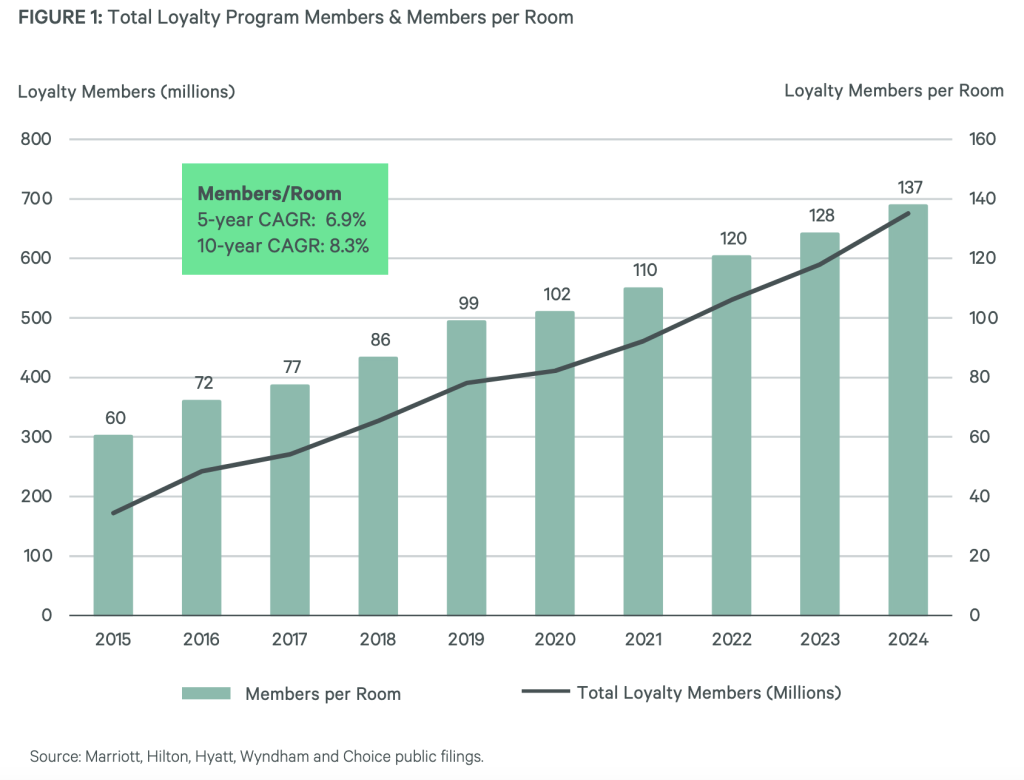
Hotel and resort loyalty programs have become powerful tools that do more than reward frequent travelers; they’re now essential for driving demand. The numbers tell the story: In 2024, total membership surged by an impressive 14.5 per cent, significantly outpacing the 6.7 per cent growth in available rooms.
This surge increased the number of members per available room by 7.4 per cent, reaching 137, underscoring the critical role these programs play in maintaining hotel occupancy and revenue stability.
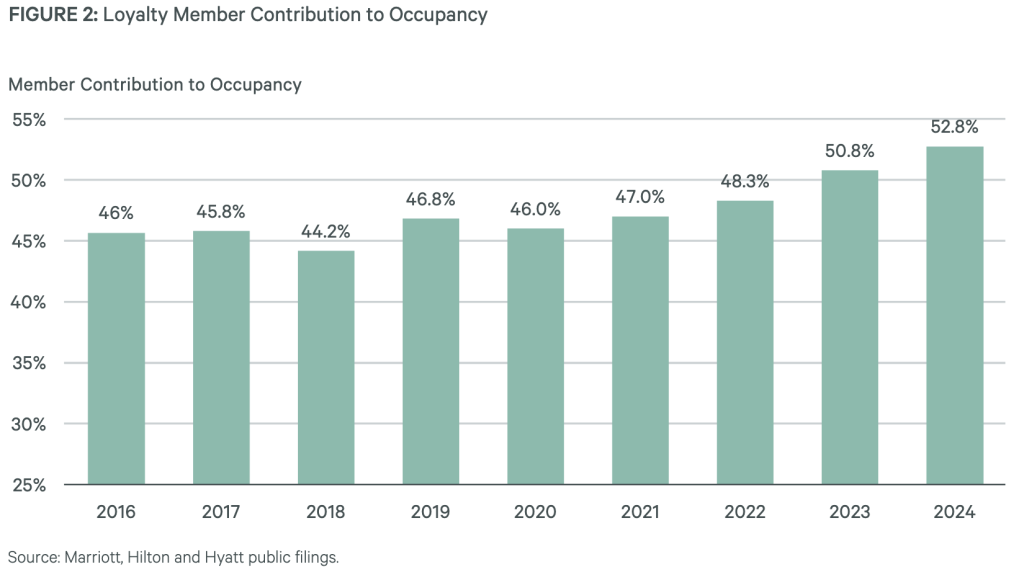
 While the growth of loyalty programs undeniably helps fill rooms, it also presents a challenge: the dilution of the “road warrior” effect. In 2024, loyalty members accounted for 52.8 per cent of occupied rooms, a solid 2-percentage-point increase from 2023, which significantly outpaced the overall U.S. demand growth of 1.2 per cent.
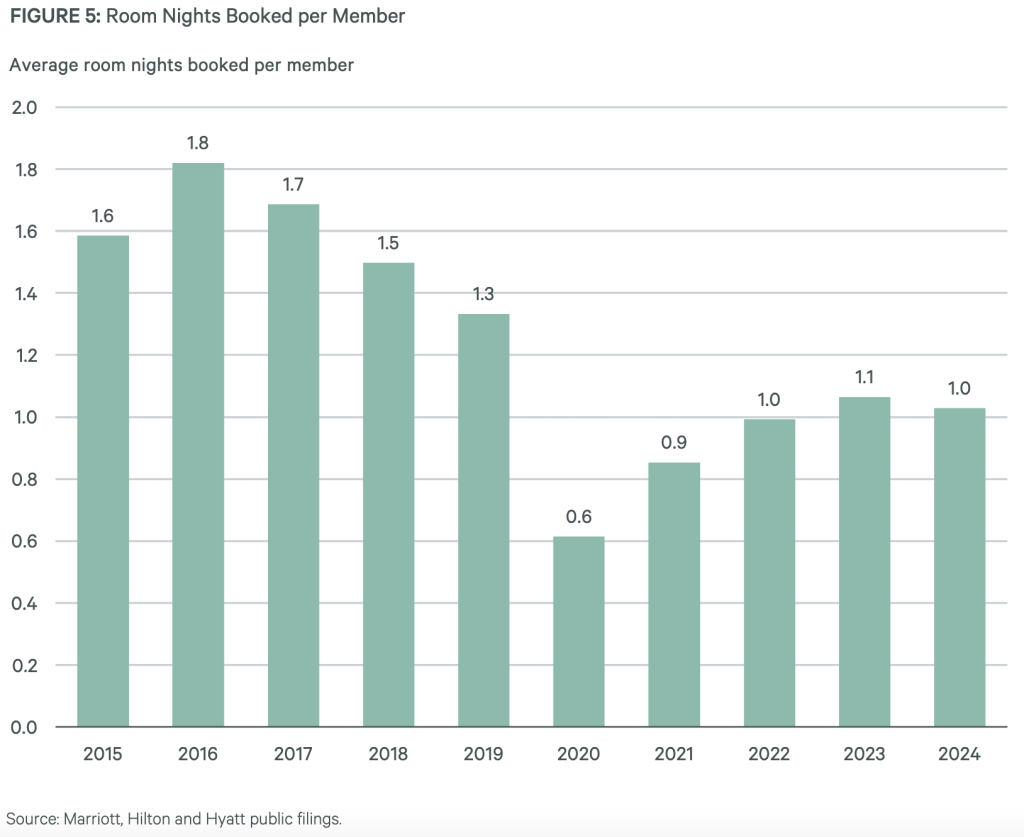
However, the average number of room nights per member decreased by 3.5 per cent, from 1.1 to 1.0. This suggests that while more members stay in hotels, they stay less frequently. This shift is likely due to increased members earning points through credit cards and partnerships rather than frequent hotel stays. The key challenge for hotels is to convert these “retail” travelers into repeat, high-value guests.
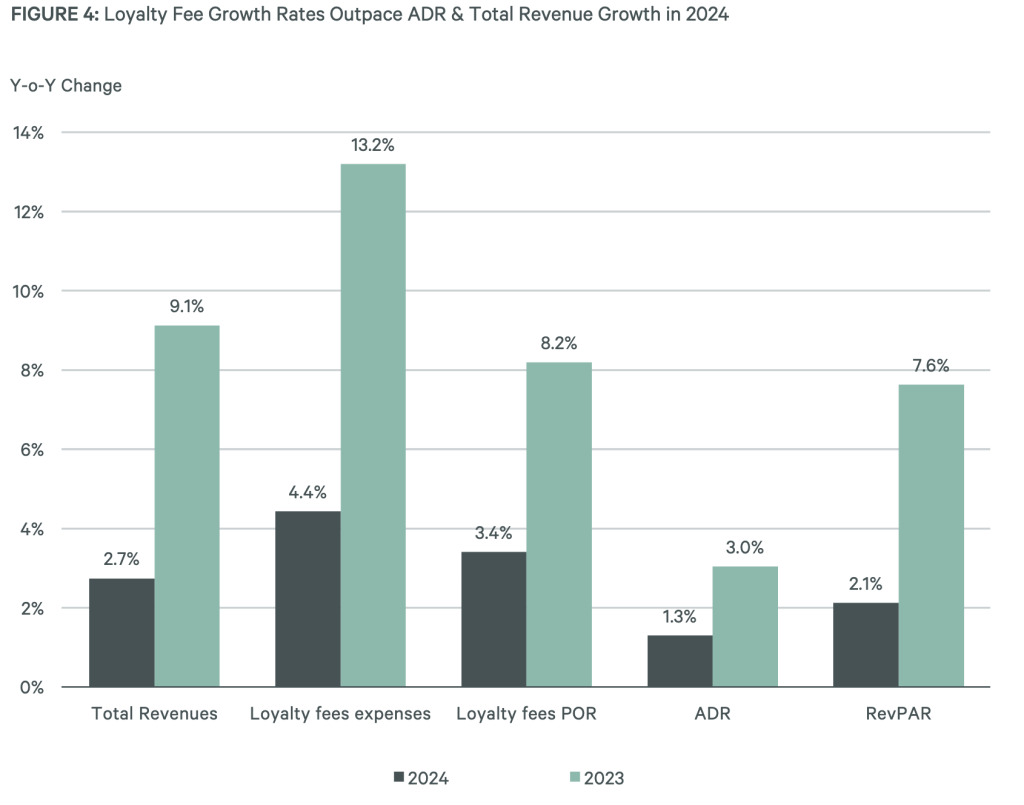
 The financial implications of loyalty programs are crucial for hotel and resort owners. In 2024, loyalty program fees increased by 4.4 per cent, outpacing the 2.7 per cent growth in total revenue. This resulted in the cost per occupied room rising slightly to $5.46, representing 1.6 per cent of total revenue, up from 1.58 per cent in 2023.
While these costs are rising, it’s important to recognize that loyalty programs still function as a valuable form of “occupancy insurance,” providing a consistent source of demand, particularly during slower seasons.
Hotel and resort loyalty programs have also seen a balancing act in their financial structure. In 2024, both loyalty program revenues and liabilities showed balanced growth, increasing by 8.3 per cent and 8.4 per cent, respectively, reaching post-pandemic highs. 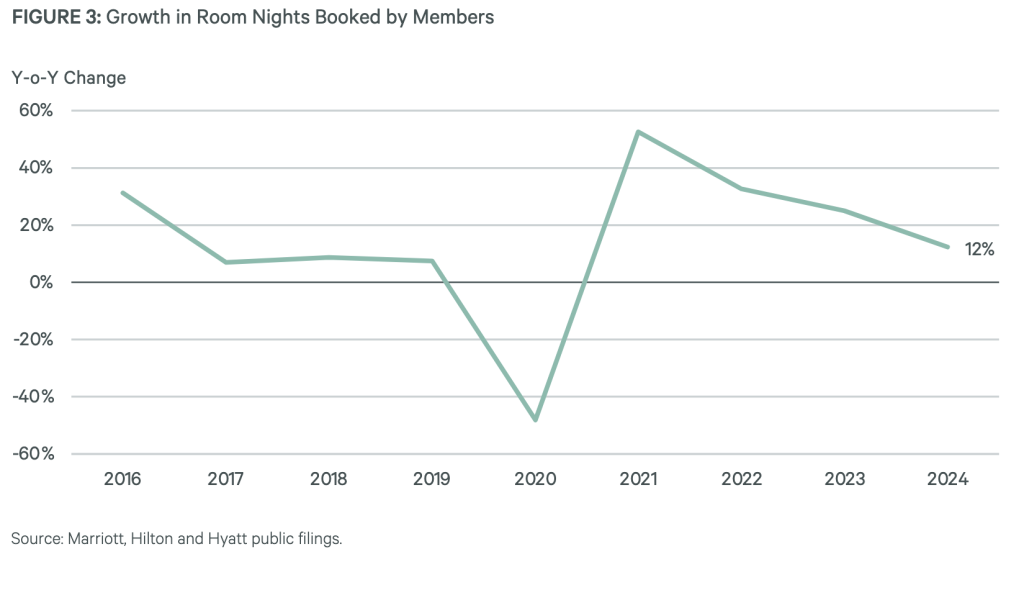 However, it’s worth noting that the liability per member decreased by 5.3 per cent to $17.85, which is 11.3 per cent of the Average Daily Rate (ADR). This suggests that members redeem points almost as quickly as they earn them, leaving only a small incentive for future redemption.
The evolving dynamics of loyalty programs require a strategic approach for hospitality professionals. To maximize their return on investment (ROI), owners, asset managers, and developers should benchmark their performance against alternative distribution channels.
 By carefully measuring the value and contribution of loyalty programs, brands can effectively demonstrate their ROI, owners can make informed decisions about program costs, and investors can accurately assess the value of loyalty-driven assets.
Read the report here: CBRE
Do you have any industry knowledge, experience, or news you’d like to share? Why not send us your press releases, survey results, news, and articles? We will review them and may publish them on the IHS website. Just complete the contact form and get in touch.
Subscribe today to our LinkedIn newsletter, Inside Hospitality.